
Florida Award
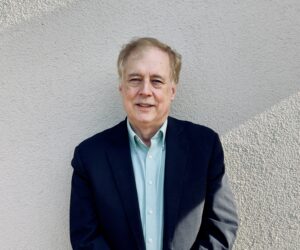
2026 Florida Award Winner
Congratulations to dR. Steven A. Benner
Foundation for Applied Molecular Evolution (FfAME)
The Westheimer Institute of Science and Technology (TWIST)
Alachua, Florida
The 2026 Florida Award is presented to Dr. Steven A. Benner. Dr. Benner’s work has fundamentally reshaped the chemical understanding of genetics, evolution, and the origins of life. He earned his undergraduate and Master’s degrees in Molecular Biophysics and Biochemistry from Yale University, and his PhD in Chemistry from Harvard University. He has held professorial appointments at Harvard University, ETH Zurich, and the University of Florida, where he served as the V.T. & Louise Jackson Distinguished Professor of Chemistry.
In 2005, Dr. Benner founded the Foundation for Applied Molecular Evolution (FfAME) and the Westheimer Institute of Science and Technology (TWIST), organizations dedicated to advancing chemistry at the interface of biology, evolution, and technology. He has also founded biotechnology companies including EraGen Biosciences and Firebird BioMolecular Sciences LLC, and has contributed foundational technologies to multiple additional companies—among them Alantos, Bayer, Siemens, and DNA Script—supporting platforms in drug discovery, molecular diagnostics, and biotechnology. His innovations have led to diagnostic products widely used in medicine and to new strategies for developing novel classes of therapeutics.
Dr. Benner’s laboratory achieved several historic scientific milestones. It was the first to synthesize a gene encoding an enzyme, an achievement that helped establish synthetic biology as a field and enabled new methods for DNA synthesis and sequencing. He also led the first successful efforts to construct DNA systems containing more than four nucleotide building blocks, expanding the genetic alphabet from four letters to twelve and demonstrating that heredity is a fundamentally chemical phenomenon not limited to natural DNA. His work further advanced dynamic combinatorial chemistry, enabling the discovery of small-molecule therapeutic leads, and laid the foundations of paleo-molecular biology through the reconstruction and study of ancestral biomolecules.
In biology, Dr. Benner was instrumental in establishing paleogenetics, in which ancestral genes and proteins from extinct organisms are resurrected and studied experimentally to understand molecular evolution. He has also been a leading figure in astrobiology, developing experimental frameworks for the origin of life, investigating exotic chemistries on worlds such as Venus and Titan, and devising strategies to detect extraterrestrial life that may differ fundamentally from life on Earth.
Dr. Benner’s honors include the Dreyfus Award for Young Faculty, a Sloan Foundation Fellowship, and election as a Fellow of both the American Association for the Advancement of Science and the International Society for the Study of the Origin of Life. He is the author of Life, the Universe, and the Scientific Method and is completing a new book on extant life on Mars, scheduled for publication in Summer 2026.
Previous Florida Award Recipients
- 1952 Paul Gross (Duke University)
- 1953 A. E. Wood (University of Mississippi)
- 1954 C. B. Pollard (University of Florida)
- 1955 H. E. Skipper (Southern Research Institute)
- 1956 George K. Davis (University of Florida)
- 1957 C. R. Hauser (Duke University)
- 1958 Karl Dittmer (Florida State University)
- 1959 J. E. Hawkins (University of Florida)
- 1960 H. H. Sisler (University of Florida)
- 1961 Michael Kasha (Florida State University)
- 1962 Jack Hine (Georgia Institute of Technology)
- 1963 George Butler (University of Florida)
- 1964 C. T. Bahner (Carson-Newman College)
- 1965 Werner Herz (Florida State University)
- 1966 Paul Tarrant (University of Florida)
- 1967 O. K. Rice (University of North Carolina)
- 1968 Earl Frieden (Florida State University)
- 1969 John Baxter (University of Florida)
- 1970 S. P. McGlynn (Louisiana State University))
- 1971 Ray Lawrence (USDA Naval Stores Laboratory)
- 1972 James V. Quagliano (Florida State University)
- 1973 Gregory Choppin (Florida State University)
- 1974 Sidney Fox (University of Miami)
- 1975 Dean F. Martin (University of South Florida)
- 1976 William Jones (University of Florida)
- 1977 Cecil Criss (University of Miami)
- 1978 Harry Walborsky (Florida State University)
- 1979 Mary Good (Louisiana State University)
- 1980 Raymond Sheline (Florida State University)
- 1981 Wallace Brey (University of Florida)
- 1982 ames D. Winefordner (University of Florida)
- 1983 Theodore A. Ashford (University of South Florida)
- 1984 Leo Mandelkern (Florida State University)
- 1985 Brian Stevens (University of South Florida)
- 1986 Harry P. Schultz (University of Miami)
- 1987 DeLos F. DeTar (Florida State University)
- 1988 Edward K. Mellon (Florida State University)
- 1989 William R. Dolbier (University of Florida)
- 1990 R. Bruce King (University of Georgia)
- 1991 George R. Newkome (University of South Florida)
- 1992 Charles E. Carraher (Florida Atlantic University)
- 1993 Norman L. Allinger (University of Georgia)
- 1994 Albert Padwa (Emory University)
- 1995 Alan R. Katritzky (University of Florida)
- 1996 Luis Echegoyen (University of Miami)
- 1997 N. Yngve Öhrn (University of Florida)
- 1998 Jack Saltiel (Florida State University)
- 1999 Mostafa El-Sayed (Georgia Institute of Technology)
- 2000 Rodney J. Bartlett (University of Florida)
- 2001 Thomas J. Vickers (Florida State University)
- 2002 Alan G. Marshall (Florida State University)
- 2003 Kenneth B. Wagener (University of Florida)
- 2004 John G. Dorsey (Florida State University)
- 2005 Charles R. (Martin University of Florida)
- 2006 Roger M. Leblanc (University of Miami)
- 2007 Naresh Dalal (Florida State University)
- 2008 George Christou (University of Florida)
- 2009 Kirk S. Schanze (University of Florida)
- 2010 Timothy Cross (Florida State University)
- 2011 Frank Millero (University of Miami)
- 2012 Weihong Tan (University of Florida)
- 2013 Joe Schlenoff (Florida State University)
- 2014 Weitao Yang (Duke University)
- 2015 Lisa McElwee-White (University of Florida)
- 2016 Richard D. Adams (University of South Carolina
- 2017 David N Bertan (Duke University)
- 2018 Kevin M Smith (Louisiana State University)
- 2019 John R. Reynolds (Georgia Institute of Technology)
- 2020 Brian C. Benicewicz (University of South Carolina)
- 2021 Jeffery Johnson (University of NC Chapel Hill)
- 2022 Igor Alabugin (Florida State University)
- 2023 Michael Therien (Duke University)
- 2024 Brent Sumerlin (University of Florida)
- 2025 Prof. Hans-Conrad zur Loye (University of South Carolina)