
The Florida Showcase Symposium features senior members of the Florida local section and the breadth and quality of their research or educational activities.
FL-ACS is happy to announce the 2026 Showcase Symposium Speakers:

University of Central Florida
Florida International University
Florida State University
Professor Stephen M. Kuebler received his D.Phil. in Chemistry from the University of Oxford and his B.S. in Chemistry (summa cum laude, with a minor in Physics) and B.A. in German (cum laude) from Tulane University. He conducted postdoctoral research at the California Institute of Technology and the University of Arizona.
He joined the University of Central Florida in August 2003 as Assistant Professor of Chemistry and Optics (joint appointment with CREOL, The College of Optics and Photonics). He was promoted to Associate Professor with tenure in 2009 and to Professor in 2019. He has also served as Interim Assistant Vice President of Research & Commercialization and is the co-founding Associate Director of the UCF Center for Ethics.
Dr. Kuebler is a materials chemist and optical scientist whose research focuses on the design, preparation, and characterization of materials and processes for 3D nano- and microfabrication. His group develops laser-based techniques such as multi-photon lithography to create functional nanophotonic structures and devices. Additional interests include nonlinear optical materials, photochemistry, beam-shaping optics, and ethics/responsible conduct in STEM research and education.
He has received numerous honors, including an NSF CAREER Award, multiple Teaching Incentive Program (TIP) and Excellence in Undergraduate Teaching Awards, a Marshall Scholarship, and Goldwater Scholarship. His work has been featured in media outlets and he actively collaborates on interdisciplinary projects involving photonics, additive manufacturing, and institutional ethics.
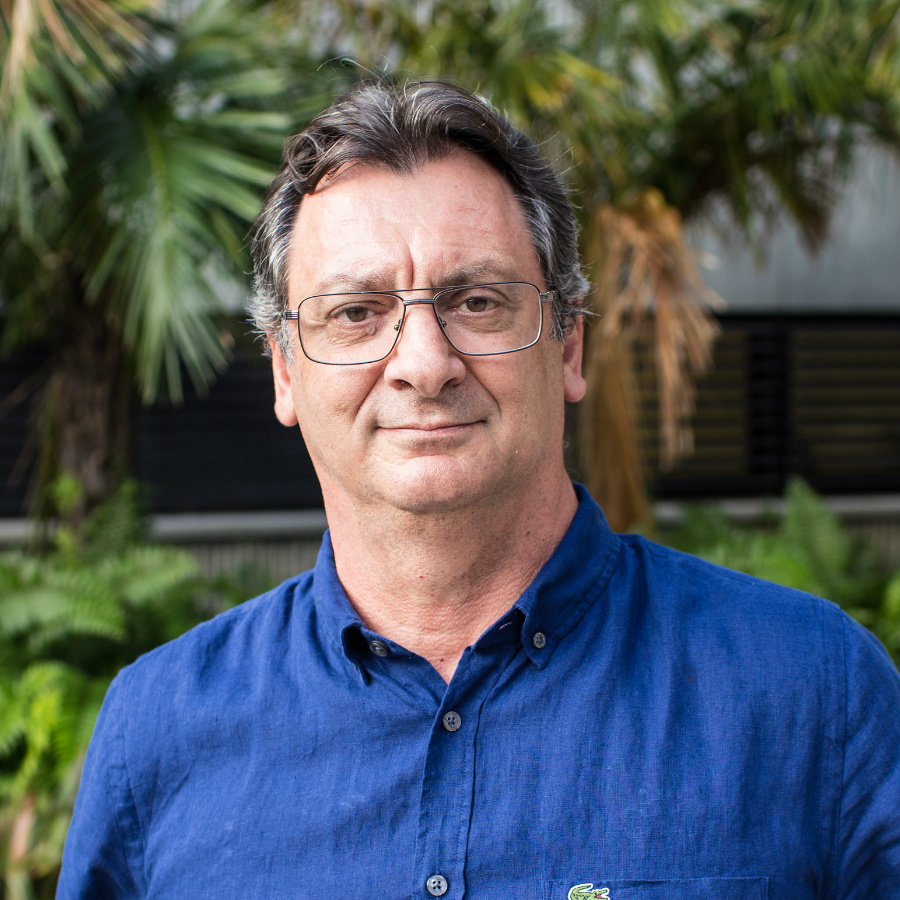
Professor Raphael G. Raptis received his B.S. in Chemistry from the Aristotle University of Thessaloniki, Greece, his M.S. in Chemistry from the University of Texas at El Paso, and his Ph.D. in Inorganic Chemistry from Texas A&M University. He conducted postdoctoral research at Texas A&M University and the Research School of Chemistry, Australian National University.
He began his independent career as Assistant Professor at the University of Crete (1993–1997), followed by positions at the University of Texas at El Paso and the University of Puerto Rico, Río Piedras (Professor, 1998–2013). In 2013, he joined Florida International University as Professor of Chemistry and Biochemistry.
Dr. Raptis is a synthetic inorganic chemist, electrochemist, and X-ray crystallographer. His research focuses on the study of metal center cooperation in polynuclear systems supported by pyrazole-derived ligands. Active projects include catalysis and small molecule activation, electronic structure and redox properties (including mixed-valence and electron transfer), magnetic exchange, functional materials such as redox-active metal-organic frameworks for gas sorption and solar energy applications, bioinorganic models and MRI contrast agents, lanthanide/actinide chemistry, and advanced characterization techniques (X-ray crystallography, spectroscopy, electrochemistry, and spectroelectrochemistry).
His group operates the departmental X-ray diffractometer and collaborates extensively with researchers in the U.S., Europe, and China, accessing specialized facilities such as national labs for high-magnetic-field and synchrotron studies.
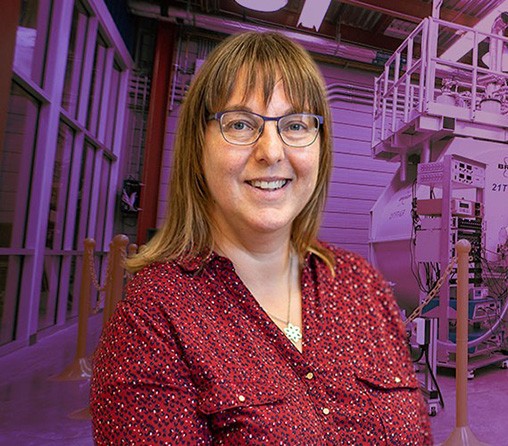
Professor Kristina (Kicki) Håkansson received M.Sc. and Ph.D. degrees in Molecular Biotechnology from Uppsala University, Sweden. She was a Swedish Foundation for International Cooperation in Research and Higher Education (STINT) postdoctoral fellow with Prof. Alan G. Marshall at the National High Magnetic Field Laboratory, Florida State University.
In 2003, she joined the faculty in Chemistry at the University of Michigan. Dr. Håkansson received a Searle Scholar Award (2004), an American Society for Mass Spectrometry Research Award (2005), an Eli Lilly Analytical Chemistry Award (2005), and an NSF Career Award (2006).
In 2009, she was promoted to Associate Professor, with tenure and, in 2013, to Professor. In 2016 she received the Biemann Medal from the American Society for Mass Spectrometry, in 2018 an Agilent Thought Leader award, and in 2020 the Berzelius Gold Medal from the Swedish Mass Spectrometry Society. Dr. Håkansson was honored as an elected fellow of the American Society for Mass Spectrometry in 2026.
Her research interests are in Analytical Chemistry and Chemical Biology with a focus on biomolecular mass spectrometry, including gas-phase activation methods, posttranslational modifications, carbohydrate structural determination, and functional studies of natural product biosynthetic enzymes.